Atlanta-area physicians now offer the TenJet® procedure — a minimally invasive, non-surgical treatment that removes damaged tendon tissue through a small incision, with no general anesthesia and minimal downtime.
Schedule a ConsultationPatient Story
Pickleball injuries often become chronic tendon problems. Here a TenJet patient describes treatment for exactly that kind of damage.
TenJet Patient Testimonial
Video courtesy of HydroCision, Inc., the maker of TenJet®. Individual results vary; this patient's experience is not a guarantee of outcome. Talk with a specialist about whether the procedure is appropriate for you.
Pickleball puts repetitive stress on tendons throughout the body. The most common injuries we see in Atlanta players include:
When rest, physical therapy, and injections haven't resolved your pain, TenJet® percutaneous tenotomy offers a proven next step before surgery.
TenJet® by HydroCision uses a thin, high-pressure saline stream to remove damaged tendon tissue through a small incision — without cutting healthy surrounding tissue. The procedure is performed under ultrasound guidance in an office or outpatient setting.
Most patients return to light activity within days and to sport within weeks, depending on the injury location and severity. Learn more at hydrocision.com/product/tenjet/.
Official demonstration video from HydroCision, the maker of TenJet, plus a look at how tendinitis differs from the deeper tissue degeneration TenJet is designed to treat.
TenJet Patient Animation — How the Procedure Works


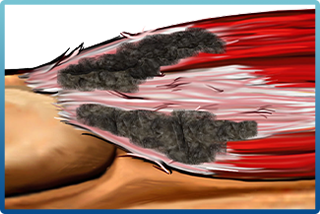
Diagrams and video courtesy of HydroCision, Inc.
Common Questions
Most commonly lateral and medial elbow, rotator cuff, patellar tendon, Achilles and plantar fascia — the tendons loaded by repeated overhead motion, lunging and rapid direction changes.
The sport combines frequent play with repetitive loading, and many players take it up later in life when tendons are already less tolerant of sudden increases in volume.
Often with modification, though continuing at full volume through a degenerating tendon tends to prolong the problem. Get it assessed before adjusting your playing schedule.
It depends on which tendon is involved. Published cases range from around three months for a shoulder returning to racquet sport to twelve weeks for a patellar tendon.
This information is general and is not medical advice. Whether any procedure is appropriate for you can only be determined by a physician who has examined you and reviewed your imaging.